How to Store Tomatoes: Counter First, Fridge Only If You Must
Farmer Markets6 min read
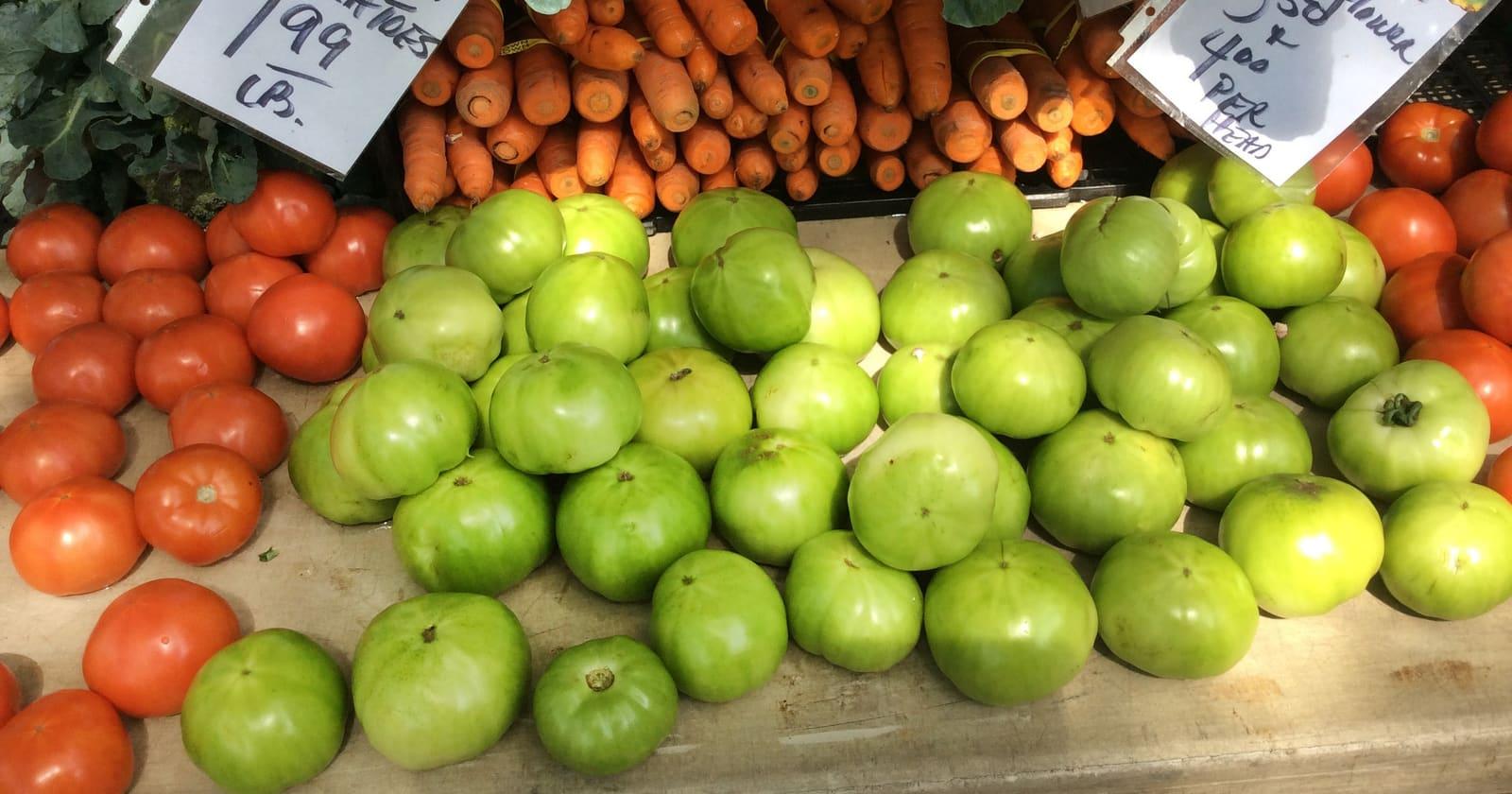
Store whole tomatoes on the counter, out of direct sun, and eat them within about a week of when they ripen. The fridge is for two cases only: a ripe tomato that will spoil before you get to it, and a tomato you have already cut.
Keep Whole Tomatoes on the Counter
Iowa State University's Spend Smart Eat Smart program puts it plainly: tomatoes taste best if not refrigerated. Keep them at room temperature, away from direct sunlight, and use them within one week after they ripen. It says to refrigerate them only if you cannot use them before they spoil.
Leave them unwashed until you are about to eat them. A Texas A&M food safety guide says to always store whole tomatoes unwashed and to keep the storage spot clean and dry. A bowl on the counter or a single layer on a plate both work. A sealed plastic bag does not: the University of Arkansas tomato fact sheet recommends tomatoes that are unpackaged or in perforated wraps, because they need air moving around them to ripen.
The same Texas A&M guide suggests shopping often and buying only what you will use within a few days. At a weekly market that means buying in stages: a few ripe ones for the next two days and some firmer ones that will come ready later in the week.
Why the Fridge Is Hard on Tomatoes
A home refrigerator runs at 40 degrees Fahrenheit or below, which is where the FDA wants most perishable produce kept. Tomatoes are the exception, because they are damaged by cold well above that.
Lida Araghi, an extension nutrition and food specialist at the University of Arkansas System Division of Agriculture, explains that below about 55 degrees Fahrenheit the enzymes that develop a tomato's flavor are inhibited and the cell membranes can break down. The result is the mealy, bland tomato most people have had at least once.
Growers work to the same numbers. The University of Kentucky's post-harvest guide for farmers says that to prevent chilling injury, they should not store mature green fruit below 55°F or red fruit below 50°F. Green tomatoes are the more sensitive of the two, so an unripe tomato should never go in the fridge.
When Refrigerating Makes Sense
There is one exception for whole tomatoes. Araghi says it is fine to refrigerate tomatoes that are very ripe when you need to keep them from spoiling for a short time. Iowa State gives the same advice: refrigerate only if you cannot use them before they spoil.
If you do chill them, let them come back to room temperature before you eat them. Araghi says that improves the flavor.
In the fridge, keep tomatoes away from raw meat. The Texas A&M guide says to store raw meat on the bottom shelf in a tray or pan so nothing drips onto produce, and to throw away tomatoes that touch raw meat or its juices.
Ripening Green Tomatoes
Late in the season, market tables fill with green tomatoes, and gardeners pick their last fruit ahead of a frost. Whether those will ripen depends on how far along they are.
University of Minnesota Extension says tomatoes picked truly green will probably never ripen to a good flavor, but those that are starting to turn white or pink should not disappoint. A mature green tomato, full size but not yet colored, will often ripen well. The clue is a star or streak of white on the bottom. If the bottom is as green as the rest of the fruit, Minnesota says it is not worth ripening indoors. The Arkansas fact sheet agrees that mature green tomatoes can reach a quality similar to vine-ripened ones if they get the right conditions.
The right conditions are warmth, not light. Minnesota's method:
- Keep the tomatoes at room temperature.
- Lay them out one layer deep, spaced so they do not touch.
- Skip the sunny windowsill. Light is not needed, and warm temperatures matter more.
- Check them often and eat each one as it ripens.
Minnesota says the fruit will ripen over the next few weeks. The Kentucky guide gives growers a target of 65-70°F for ripening mature green tomatoes, which is an ordinary room in most houses. A garage or porch that drops below 55°F is the wrong place, for the chilling reasons above.
If you buy green tomatoes to fry or pickle rather than to ripen, use them while they are firm. The Arkansas fact sheet also warns that tomatoes picked from frost-killed or disease-killed plants have less acid and may be unsafe to can, so ask the vendor when the fruit was picked if canning is the plan.
Choosing Tomatoes at the Market
Good storage starts with sound fruit. Iowa State says to choose tomatoes that are firm and fully colored and to avoid ones with brown or wrinkled spots. The Arkansas fact sheet describes a ripe tomato as completely red or reddish-orange, depending on the variety, and says it should give slightly to gentle palm pressure. It also says to pass over tomatoes that are very soft, bruised or cracked.
Because ripe color varies by variety, the squeeze tells you more than the color on an unfamiliar tomato, and the grower can tell you what a ripe one of that variety looks like. For when tomatoes are at their best where you live, see our guide to what produce is in season.
Carry them home on top of the bag, not under the potatoes. The Texas A&M guide notes that damaged tomatoes spoil quickly and could carry pathogens that cause foodborne illness. If you shop a Saturday market and eat through the week, sort them as you unpack: soft ones to eat first, firm ones to hold.
Washing and Storing Cut Tomatoes
Wash a tomato right before you cut it, not before you store it. The FDA says to wash all produce under running water before preparing or eating it, including produce from a farmers market, and not to use soap, detergent or commercial produce wash. The Texas A&M guide adds that you should rub each tomato gently with your hands under the water, and then cut off and throw away the stem end, where pathogens can hide. The FDA also says to cut away any bruised or damaged areas.
Once a tomato is cut, it goes in the fridge. Texas A&M says to refrigerate cut tomatoes within 2 hours of cutting them and to store them in plastic bags, clean airtight containers or tightly covered in plastic wrap, in a refrigerator at 40 degrees Fahrenheit or below. Since the fridge is hard on texture, slice only what you need.
Freezing Tomatoes
Freezing is the way to keep a big haul past a week. The National Center for Home Food Preservation gives a simple method for freezing raw tomatoes:
- Choose firm, ripe tomatoes with a deep red color.
- Wash them and dip them in boiling water for 30 seconds to loosen the skins.
- Core and peel them.
- Freeze them whole or in pieces, packed into containers with 1 inch of headspace.
- Seal and freeze.
The Arkansas fact sheet explains why peeling is worth the trouble: tomato skins become tough in the freezer. The NCHFP is clear that thawed tomatoes will not be solid, so use them only for cooking or seasoning. They are fine in sauce, chili and soup and no good on a sandwich.
You can also cook them first. For stewed tomatoes, the NCHFP says to remove the stem ends, peel and quarter ripe tomatoes, cover and cook them until tender (10 to 20 minutes), then set the pan in cold water to cool before packing and freezing.
Tomatoes are about the opposite of onions, which keep for months in a cool, dry spot. A tomato wants a warm counter and a short wait, and anything you cannot eat in time belongs in a pot or the freezer, not the crisper drawer.