How to Store Onions So They Last for Months
Farmer Markets6 min readGuide
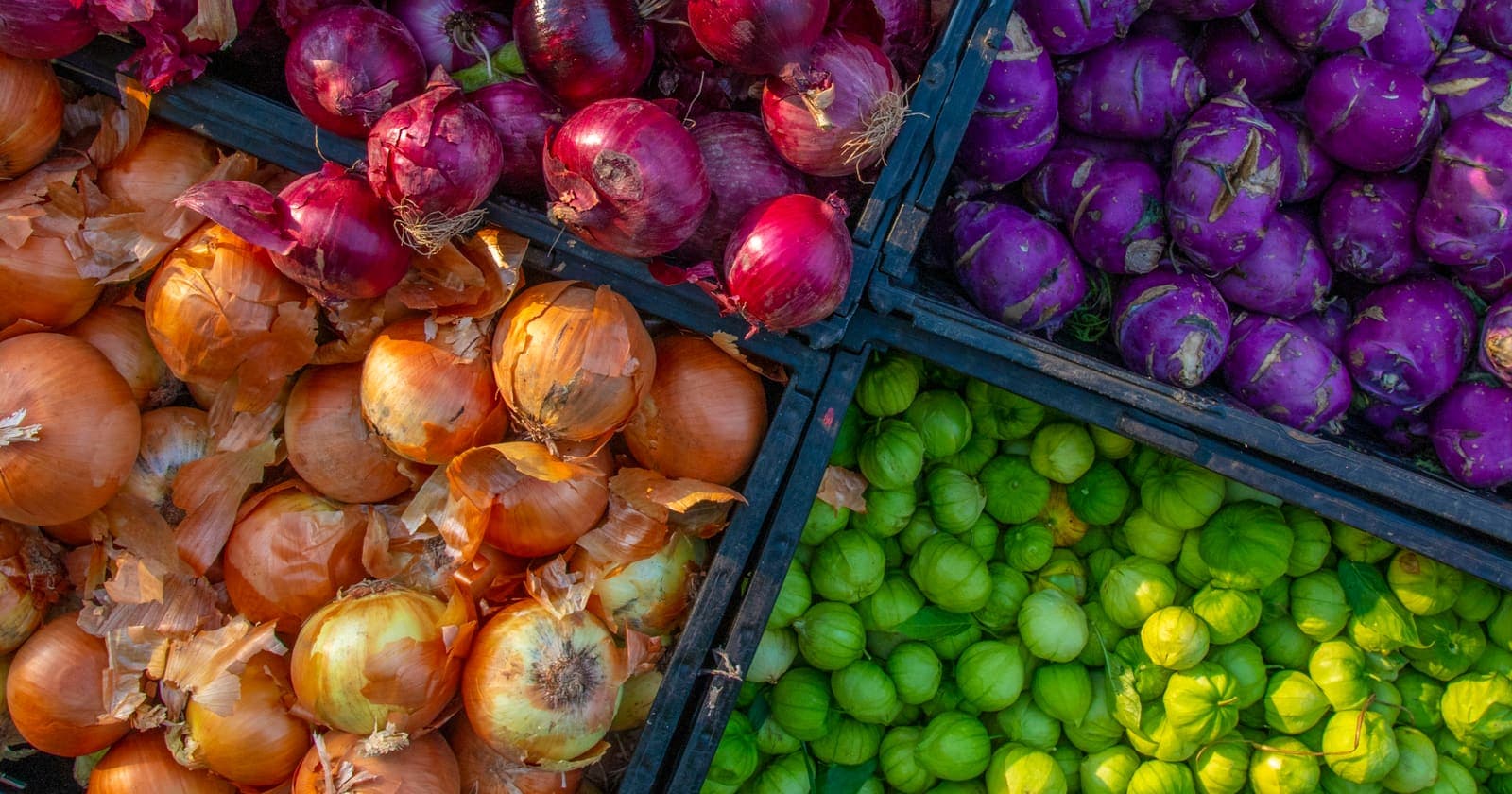
Store whole onions somewhere dry, dark and airy, in a mesh bag or an open basket, and keep them out of sealed plastic. Once an onion is peeled or cut it belongs in a sealed container in the refrigerator, where it is good for about a week.
That covers most kitchens. The rest of this is about getting from "a few weeks" to "a few months", which mostly comes down to which onions you bought and how warm the spot is.
Where Whole Onions Should Live
Colorado State University Extension puts it in one line: keep whole, unpeeled storage onions in a cool, dark, dry, well-ventilated place, in a breathable bag such as burlap or plastic mesh. Each of those four words is doing a job.
Dry matters most. Every source below that gives a number wants the humidity at 65 to 70 percent or less. Utah State University Extension notes that root growth on a stored onion means the humidity is too high, so if yours are putting out little white roots, move them.
Ventilated is the one people skip. The plastic produce bag from the store, a closed drawer, a lidded bin: none of them let air move. South Dakota State University Extension suggests mesh sacks, a ventilated plastic crate, or a box with holes in it. The University of California's Master Food Preservers add the old tricks of braiding the tops or hanging the bulbs in old nylon stockings, and say that if you spread onions out instead, keep the pile to two layers at most.
In practice that means a basket on a pantry shelf, a mesh bag on a hook in the basement, or a crate in an unheated room that does not freeze. Not the cabinet above the stove, and not the windowsill.
How Cold Is Cool
This is where the experts stop agreeing, and it is worth knowing why.
For long storage, the University of Minnesota Extension recommends cold and dry conditions, 32 to 40 degrees Fahrenheit at about 65 percent humidity, and expects onions kept that way to last about four months. Utah State agrees on the cold end: 32 degrees keeps onions dormant, while onions held between 40 and 50 degrees sprout and decay quickly.
South Dakota State comes at it from the other side and says dried bulbs will actually keep longer at 80 degrees than at 60, as long as the humidity stays below 70 percent. The California preservers land in the middle with 40 to 60 degrees.
Read together, the advice is less contradictory than it looks. Properly cold works. Dry room temperature works for a shorter stretch. The cool, slightly damp middle, which describes a lot of garages in spring and fall, is where onions wake up and start growing. A green shoot is the onion telling you the spot is too warm for it, or that it was never dried well in the first place.
Should Onions Go in the Fridge
For whole storage onions, you will find a university on each side. The California preservers say flatly not to refrigerate them. Minnesota points out that a home refrigerator runs around 40 degrees and 50 to 60 percent humidity, which it calls fine for long-term storage of onions and garlic. South Dakota State says they may be stored there too.
A reasonable way to settle it: if you have a dry pantry and will use the onions within a month or so, leave them out. Iowa State University Extension's rule of thumb for ordinary kitchen storage is to use whole onions within 4 weeks. If your kitchen is hot and humid, or you bought more than a month's worth, the refrigerator is the better of two imperfect options. Leave them loose, not tied up in a plastic bag.
Sweet onions are the exception. Colorado State says whole sweet or mild onions with a high water content should be stored in the refrigerator from the start.
Eat These Ones First
Not every onion is a storage onion, and a market table usually has both kinds side by side.
South Dakota State's ranking is simple: yellow onions keep the longest and red onions the shortest, with mild white onions also on the short side. The California preservers say the same thing by flavor, that pungent onions outlast sweet ones, and they add two more to the front of the line: bulbs with thick necks, and any that are small or a little soft.
So sort the bag when you get home. Sweet onions, reds, anything with a fat or still-green neck, and anything that gives when you squeeze it go in this week's cooking. Hard, tight-necked yellow onions go to the back of the shelf.
It also pays to choose well at the stall. Iowa State says to pick onions that are dry, shiny and firm, without dents or bruises. Colorado State adds that a good onion is heavy for its size and has no smell, and that you should pass on any that have begun to sprout.
If you want onions that will see you into winter, ask the farmer whether they have been cured. Curing is the drying period after harvest, two to four weeks at room temperature by Minnesota's guidance, and the California preservers call it done when the skins are dry and papery. Utah State is blunt about onions sold without a full cure: they are not meant to be stored for long, however carefully you do it.
Keep Them Away From Potatoes and Fruit
Onions and potatoes end up in the same bin in a lot of kitchens. The California preservers advise against storing onions with apples, pears or potatoes, because those foods pick up the onion flavor. Potatoes also want the opposite air: Minnesota recommends cold, dark and moist storage for them, around 95 percent humidity, far damper than any of the onion advice above. Give each its own shelf.
Once an Onion Is Cut
The rules flip as soon as the skin comes off. A peeled or cut onion needs cold and a lid.
Colorado State's guidance is to refrigerate or discard cut onions within 2 hours, and to keep peeled onions, whether chopped, sliced or whole, in a sealed and dated container in the refrigerator for up to 7 days. Iowa State gives the same 7 days.
If you will not get to them within the week, Colorado State says to freeze cut onions. Freezing whole bulbs is a different matter: the National Center for Home Food Preservation says it is usually not recommended, needs blanching first, and leaves you with onions suitable for cooking only.
Check the Bag Now and Then
Stored onions do not announce when one has gone bad until the smell does it for them. The California preservers recommend looking through them periodically and pulling any that are sprouting or rotting right away. Their other note on the subject is that a rotten onion is very hard to miss.
Buying Onions to Store
Cured storage onions are a fall and winter crop at most markets, and if you have a dry shelf to spare it is worth buying more than a week's worth. Our farmers market directory lists 9,132 markets, and 218 of them have "winter" in their name, so in a lot of places you can also just keep buying a few pounds at a time through the cold months.
Market schedules change at the end of the outdoor season, so check the day and hours before you make the trip. Our guide to market seasons and hours explains how winter schedules usually work, and if you have not shopped a market before, start with what to expect on a first visit.