How to Store Garlic So It Keeps for Months
Farmer Markets6 min readGuide
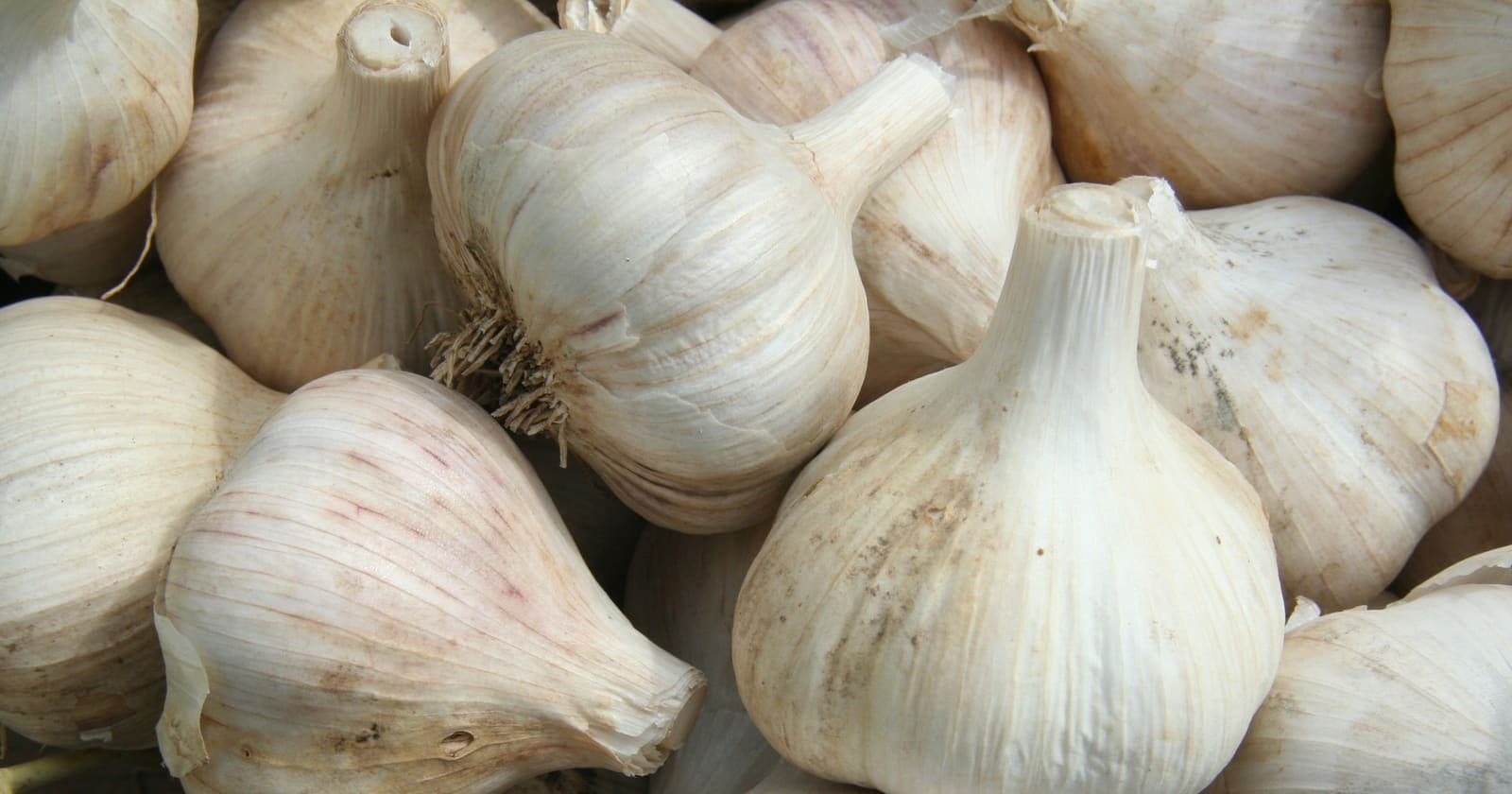
Store garlic as whole, unbroken bulbs in a cool, dry, dark place with air moving around them: a mesh bag or an open basket in a pantry, not a sealed container and not the windowsill. Kept that way a bulb lasts for months, while a clove you have pulled off the head is on a clock of a couple of weeks.
The details below are about which garlic to buy if you want it to last, why the refrigerator is a poor default, and the one popular method, garlic under oil on the counter, that is unsafe.
Where Whole Bulbs Should Live
The University of California's guide to garlic says to keep bulbs in a cool, dry, well-ventilated place in well-ventilated containers such as mesh bags. Oregon State University Extension lists the same kind of options: mesh bags, slatted crates, or braids and bunches hung up, in any cool, well-ventilated spot.
Airflow is the part worth taking seriously. A grower writing for Cornell's Small Farms Program explains that good circulation keeps the air from stagnating and mold from developing, and recommends paper bags for the short term and plastic mesh bags for a whole winter. That rules out the lidded jar, the zip bag, and the drawer packed tight with other things.
For the room itself, the same Cornell article calls an unheated pantry or garage often ideal, and warns that basements tend to have the right temperature but too much humidity. Its target is 45 to 50 percent relative humidity. Oregon State is looser and says under 70 percent.
Keep the head intact until you need it. The University of Wisconsin's horticulture extension notes that garlic stores best as whole bulbs, and that cloves separated from the bulb deteriorate more rapidly. Utah State University Extension puts a number on it: once they are off the head, cloves last only a couple of weeks.
How Long Garlic Lasts
It depends on the type, so it is worth knowing which one you are buying.
The California guide says most commercial garlic is softneck, with many small cloves to a head. Hardneck garlic sends up a green stalk, the scape, in spring and has fewer, larger cloves. The guide is direct about the trade: softneck varieties store longer than hardneck ones.
The numbers, by source:
- Oregon State: in the right conditions, softneck keeps up to 9 months and hardneck up to 6.
- Wisconsin: at room temperature, hardneck holds for only 3 to 4 months without real loss of quality, and softneck for 6 to 8.
- California: 3 to 5 months in a cool (60 degrees Fahrenheit), dry, dark place, and only 1 to 2 months for softneck at 68 to 86 degrees.
Wisconsin also splits the hardnecks. Rocambole types have a season of 3 to 4 months before the quality drops, and Porcelain types last 4 to 8.
Those ranges do not line up neatly, and the gap is mostly temperature. A warm apartment kitchen is at the short end of every one of them. If your garlic is done in six weeks, the garlic is not the problem.
Why Not the Refrigerator
Garlic has an awkward relationship with cold. Oregon State gives the ideal storage temperature as 32 to 38 degrees, and then says garlic sprouts fastest between 40 and 60. A home refrigerator runs at about 40.
That is why the California guide says the home refrigerator is not suitable for long-term storage: holding garlic at that temperature stimulates sprouting. The Cornell article agrees ("Don't be tempted") and gives the range commercial growers aim for, 56 to 58 degrees, with sprouting likely below 50 and quick shriveling above 66.
Not everyone rules it out. The University of Minnesota Extension describes a home refrigerator as cold and dry, around 40 degrees and 50 to 60 percent humidity, and calls that fine for long-term storage of garlic and onions.
A fair reading: a dry pantry shelf is the better home for whole bulbs, and the fridge is what you use when the only alternative is a hot, steamy kitchen. If garlic does go in, leave it loose and unwrapped, and expect green shoots sooner.
If It Sprouts or Shrivels
Neither one means the bulb is unsafe. The California guide says garlic stored too long may shrivel or begin to sprout, that neither is harmful, and that both mean it is past its peak. Its fix for a sprouted clove is to cut it in half and remove the green shoot from the center. Utah State adds that a clove with a green shoot is still fine to eat but tastes bitter.
Mold is a different matter. It is on the same guide's list of things a bulb worth buying should not have.
Never Keep Garlic in Oil on the Counter
This is the one piece of garlic advice that is about safety. A jar of peeled cloves under olive oil looks like a pantry staple, and at room temperature it is a botulism risk.
The California guide explains why: garlic is low in acid, the oil shuts out air, and a warm room does the rest, which is the environment Clostridium botulinum needs to grow and produce toxin. It notes that the same hazard applies to roasted garlic stored in oil, and that at least four botulism outbreaks in North America in the late 1980s and 1990s were tied to garlic in oil.
The rule from the National Center for Home Food Preservation is short. Make garlic in oil fresh, refrigerate it at 40 degrees or lower for no more than 4 days, and freeze it if you want to keep it longer. Oregon State and California give the same 4 days. Put the date on the jar.
Ways to Keep It Longer
If you have more garlic than a shelf can carry through the winter, the freezer is the simple answer. California and Oregon State describe three methods:
- Chop it, wrap it tightly, freeze it, and grate or break off what you need.
- Freeze whole bulbs or cloves, peeled or not, in a freezer bag and take cloves out one at a time.
- Puree peeled cloves with oil, two parts oil to one part garlic, and put it straight into the freezer. Do not let it sit out first. It stays soft enough to scrape out by the spoonful.
Wrap anything headed for the freezer tightly. Oregon State's warning is that garlic flavor will get into the other food in there.
Peeled cloves can also go under full-strength wine or vinegar in the refrigerator, where the acid keeps botulism out. California says that mixture keeps about 4 months, and that both the cloves and the liquid should be thrown away at any sign of mold or yeast on the surface. It does not belong at room temperature either.
Canning is out. Both guides say plain garlic would need a pressure canner, and that no processing times have been worked out for it.
Choosing Garlic That Will Last
Storage starts at the stall. The California guide says to pick bulbs that are clean and firm, with tight, unbroken skins, no mold or sprouting, and that feel heavy for their size. A bulb that feels light may have shriveled or decayed cloves inside.
Bigger is not better for keeping. The Cornell article notes that small and medium bulbs store longer on average than large ones, so eat the big heads first.
Ask the grower two things: whether it is softneck or hardneck, and whether it has been cured. Curing is the drying after harvest. California says it takes about 2 to 3 weeks for the outer skins to turn papery, and that the point of it is to keep the bulbs from rotting in storage.
California grows more than 90 percent of the country's commercial garlic, by that same guide's count, and our directory lists 965 farmers markets in California if you want it from close to the source. Garlic keeps on the same kind of shelf as storage onions, so one dry corner can hold both. The full directory has 9,132 markets, 218 of them with "winter" in the name. Outdoor seasons are winding down in much of the country, so check the day and hours before you go.