How to Sell at a Farmers Market: Permits, Scales and Getting Paid
Farmer Markets6 min read
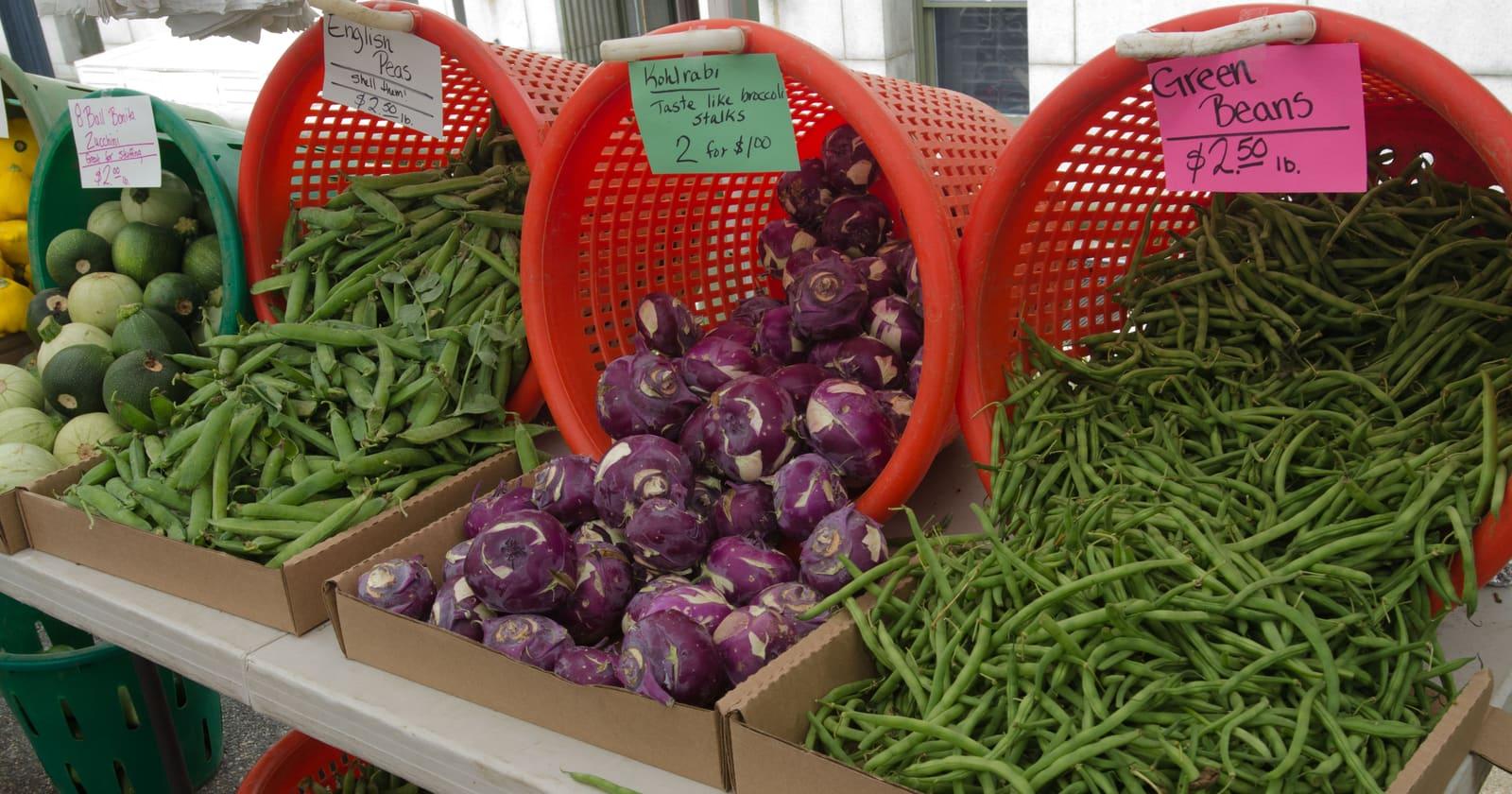
To sell at a farmers market, you pick a market, apply to its manager, and show that you meet the market's rules and your state's rules for what you sell: usually liability insurance, any license your product needs, and a certified scale if you sell by weight. The paperwork is lighter for raw fruit and vegetables than for anything you cook, can or bake, and every one of these rules is set by your state or the market rather than by one national standard.
Pick a Market and Talk to the Manager
Start with the markets near you. The state pages, such as Minnesota or Pennsylvania, show which ones are open on which days. Only 254 markets in our data publish a vendor count, but among those the median is 51 vendors, and the middle half run from about 32 to 89. That is the kind of company you are joining.
Then go and look. Penn State Extension's advice for new vendors is to visit in the last hour or two a market is open, when managers and vendors have time to talk. While you are there, it suggests checking the practical things: customer and vendor parking, whether you can park at your stand, electricity, and restrooms and handwashing nearby.
Mississippi State University Extension's guide for new sellers adds two questions for the manager. Which products sell well here, and what does the market lack? A tenth tomato grower has a harder season than the only person selling cut flowers. The same guide says to ask the manager directly about licensing, insurance and sales tax collection, since those answers are local.
Every market also has its own vendor rules: what counts as your own product, whether you can resell anything you did not grow or make, fees, and how many weeks you commit to. Read them before you apply.
Know What You Are Allowed to Sell
Whole, raw produce from your own farm is the simplest case, but it is not rule free. The FDA's Produce Safety Rule does not cover farms whose produce sales averaged $25,000 or less a year over the previous three years. Above that, a farm can still qualify for an exemption if its food sales average under $500,000 a year and it sells more to consumers and nearby restaurants and stores than to everyone else combined. A farm using that exemption has to show its name and complete business address on the produce label or at the point of purchase. A sign on your table does that job.
Anything you process is a different matter. Jams, baked goods, pickles and other home-made foods fall under each state's cottage food law, and those laws vary a lot. Minnesota is a useful example of how much detail is involved. Its Department of Agriculture's cottage food registration page caps sales at $78,000 a year, lets registered producers sell at a farmers market, limits them to foods such as baked goods, certain jams and jellies, and home-canned items with a pH of 4.6 or lower, and requires a label that includes the line "These products are homemade and not subject to state inspection." Producers selling more than $7,665 a year pay a $50 fee and take a food safety course every three years. The state has also passed changes that take effect August 1, 2027.
Your state's rules will be different, so look up your own department of agriculture or health before you plan a product line around a recipe.
Scales, Prices and Signs
You can sell produce three ways: by weight, by count, or by measure. The University of Maryland Extension's guide to weighing gives examples of each, such as apples by the pound, watermelons at a set price each, and strawberries by the dry quart.
Selling by count or measure avoids the scale question entirely. Selling by weight needs a scale made for trade, and a kitchen scale is not one. The Maryland guide says a legal-for-trade scale is marked with a serial number, a model number, a Class III designation on its ID plate and an NTEP certificate of conformance, and that you are responsible for having it inspected. Inspectors can shut down a vendor using a scale that has not been approved. In Maryland, every scale used in a sale must be registered each year, with fees that ranged from $15 to $300 when that guide was written. Penn State says Pennsylvania vendors get scales certified through the state Department of Agriculture's weights and measures office or their county's.
Weighing can also be worth the trouble. The Maryland guide works an example where a quart of tomatoes priced at $4.00 holds about 3 pounds, which at $1.49 a pound would bring in about $4.50.
Whatever you choose, put a price on everything, in writing big enough to read from the aisle. The stall in the photo above does it with handwritten cards, and it works. Mississippi State's advice on setting the number itself is plain: work out what it costs you to produce, then price from there.
Insurance and the Rest of the Paperwork
Expect the market to ask for liability insurance. Penn State notes that if you already carry a policy, the market may ask to be added as an "additional insured." Ask your insurer for the certificate before the season starts, not the week of your first market.
Sales tax is the other item that depends entirely on your state and sometimes on what you sell, which is why Mississippi State puts it on the list of questions for the manager. Keep your records from the first market day, not the first busy one.
Taking Cards, SNAP and WIC
Penn State's advice is to bring enough change for your cash box and to consider taking cards, since many shoppers carry little cash.
Food assistance is worth setting up too. Farmers who sell direct to the public can apply online to accept SNAP, and every authorized retailer has to use EBT equipment to run the transactions. Many markets handle this for you. USDA explains that a market with a scrip system can be approved to accept SNAP on behalf of all the farmers selling eligible food there, including farmers who are not approved themselves. Customers swipe at a central booth and pay you in tokens or paper scrip in whole dollar amounts, which the market later pays back to you.
That comes with a responsibility. If a vendor accepts scrip for an item SNAP does not cover, the market's permit could be taken away. USDA's list of what SNAP can buy includes seeds and plants that produce food, and excludes foods that are hot at the point of sale. Learn the list before you take your first token. Our SNAP/EBT market list shows which markets accept it, and this guide explains how it works from the shopper's side.
The WIC Farmers Market Nutrition Program works differently. Its coupons can only be spent with farmers and markets that the state agency has approved, and the program is run by state agencies such as agriculture or health departments. It operates in 49 states. Ask your manager who to contact.
On Market Day
Penn State's list of do's and don'ts is mostly common sense, and still worth reading once. Arrive on time, because a stand that is still setting up at opening loses sales. Dress neatly. Give your stand a consistent look, with your name and logo where people can see them. And do not run out of your best sellers: customers who come back for something and do not find it start shopping somewhere else. The same article makes the point that produce buyers care more about quality than price, so the best thing on your table is a better advertisement than the cheapest.